

Dog sanitary trim: When trimming makes sense
Dog sanitary trim: When it makes sense, what you can gently clean yourself, and when it's time to visit the vet. Berlin.

A local sanitary trim can make sense if long hair makes external cleaning difficult. Without proper training, you shouldn't cut or clip sensitive areas yourself. Pain, broken skin and unusual discharge are cases for the vet.
- Included
- Localised hygiene trimming doesn't mean a full-body shave.
- Home care
- Gently wipe away loose dirt from the outer coat with a damp cloth.
- Limits
- Don't cut out knots close to the skin yourself.
- Warning signs
- Pain, bleeding or broken skin are a matter for the vet.
- Grooming package
- Mini Groom with hygiene trim from 59 €.
Trimming the hair around your dog's intimate area can be a good idea if long hair makes keeping them clean difficult. Without proper training, scissors and clippers in this sensitive area belong in expert hands. At GroomRoom Berlin in Charlottenburg, hygiene trimming is available as a standalone service or as part of our grooming packages. We are open Tuesday to Saturday by appointment; the Mini Groom with hygiene trim starts at 59 €. Pain, broken skin or unusual discharge are a matter for the vet.
When does it make sense to trim the hair around a dog's intimate area?
A localised hygiene trim, meaning the limited trimming of hair that easily gets dirty, is a great option if long hair makes keeping your dog clean a struggle. The condition of their coat and skin is key, so a professional dog groomer should assess what's needed. If your dog has any pain or skin changes, a vet check is essential before any trimming; a haircut never replaces a proper medical exam or treatment.
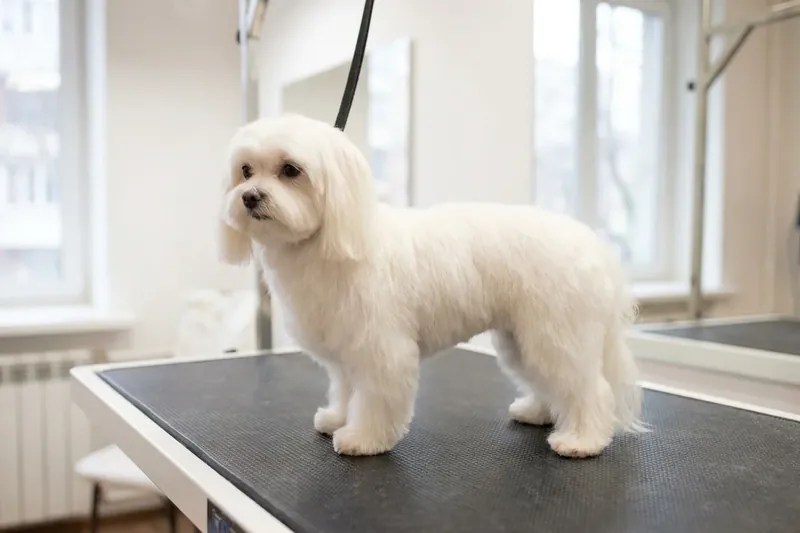
When you come in for your appointment, describe as clearly as possible which hair is causing you trouble when cleaning your dog. Is it the belly, the area around the genitals or the fur on their back end? This helps us limit the trim to the exact area that needs it. The term intimate area alone doesn't give us a clear idea of how much needs cutting.
For male dogs, the Merck Veterinary Manual mentions trimming long hair at the preputial opening as part of a veterinary treatment. The prepuce is the skin covering the penis. However, this doesn't mean there's a general rule to trim every male dog. Nor is this description a guide for treating discharge yourself.
That's why you should ask for a local assessment rather than just booking the shortest possible shave. Make sure to mention if your dog is comfortable being touched in that area, too. When working with anxious dogs, we take breaks and let them settle in first. If the coat is heavily matted, we'll discuss the best solution based on its actual condition.
Services, duration and prices at GroomRoom
Starting prices including VAT, based on online booking. We will give you the final, binding price before the appointment after assessing the coat.
| Service | Duration | Price from |
|---|---|---|
| Full groom with haircut, XS up to 2 kg | 60 min | from 79 € |
| Full groom with haircut, S 2.5 to 10 kg (also Spitz, Pomeranian, Yorkshire) | 120 min | 89 to 135 € |
| Full groom with haircut, M 10 to 18 kg | 120 to 150 min | 149 to 169 € |
| Full groom with haircut, L 18 to 25 kg, Standard Poodle, Samoyed | 180 min | from 209 € |
| Mini groom without haircut, up to 30 kg | 60 to 180 mins | 59 to 169 € |
| Cat, brushing, clipping or full package | 60 to 90 mins | 99 to 149 € |
| Hand stripping (hand-stripping) | 120 min | 70 € per hour |
What's the difference between a hygiene trim and a full-body shave?
A hygiene trim targets specific hair around areas prone to getting dirty, whereas a full-body shave shortens the coat all over. Needing intimate care doesn't mean you have to shave the whole dog. The right grooming approach depends on the coat type and the condition of the affected skin, and needs to be assessed accordingly.
The American Kennel Club's training standards list hygiene trims as a distinct part of professional dog grooming. They also require choosing tools and methods that suit the individual dog. For you, this means: describe the affected area and ask what level of grooming is actually necessary.
We list intimate area care as an individual service, and it's also included in our Mini Groom and Full Groom. So, you don't automatically have to frame your grooming request as wanting a new full-body haircut. However, a package overview doesn't replace an assessment of unusual skin conditions or painful spots.
We deliberately don't provide a blanket millimetre guide for the intimate area in this guide. A grooming recommendation for the whole body isn't a cutting instruction for sensitive areas, either. Be sure to explicitly say during your consultation if you only want to discuss local care. Deciding on a full-body haircut remains a separate question.
Which types of dirt can you gently clean at home?
You can carefully wipe away loose, superficial dirt on the outer coat with a damp cloth, provided your dog is comfortable being touched. Cleaning should be limited to the visible coat. Hard knots, wounds, or unusual discharge aren't something you should scrub, cut, or rinse yourself; you'll need professional grooming or veterinary help for that.
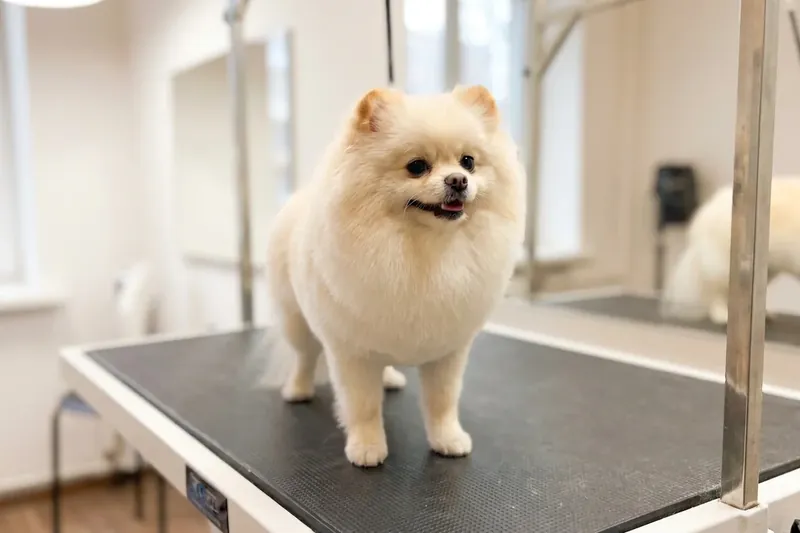
The American Kennel Club's home care guide recommends using a damp towel to wipe dirt and residue from the coat. This is for outer coat cleaning, not a guide to cleaning body openings. Therefore, stick to loosely attached dirt that you can remove without pulling on the coat.
The PDSA's grooming advice mentions using warm water to rinse mud from a dog's coat. At the same time, they warn against skin irritation caused by human shampoo. This means there's no need to preemptively treat the intimate area with extra grooming products. If your dog has an existing skin condition, check with your vet about suitable products.
If your dog reacts restlessly or anxiously, stop trying and give them some peace. The PDSA explicitly recommends stopping grooming if it causes stress. If something is stuck fast in the coat, book an assessment instead of rubbing harder. For any skin changes, you should contact your veterinary practice.
Why do scissors and clippers belong in expert hands?
Scissors and clippers belong in expert hands when it comes to the intimate area, because untrained cutting can cause injuries. A dog's sudden movement can be especially dangerous when cutting out knots. Professional dog grooming includes choosing the right tools and using them safely; simply owning a pair of clippers doesn't replace proper training or the ability to assess skin and coat.
The American Kennel Club advises against clipping or scissoring dogs yourself without proper training. They also strongly warn against cutting out matted hair with household scissors. That's why this article doesn't include grip techniques, cutting directions, or instructions for cutting out knots close to the skin.
Clippers also require expertise: training standards list clipper sensitivity and potential burns as safety concerns. Using a shorter blade setting isn't a reliable workaround if a knot seems hard to reach. Have tight matting assessed before you use any tools or try to pull the coat apart.
Don't cut out knots close to the skin in the genital area yourself. If there's pain, bleeding, or broken skin, you need to see a vet.
We never pull on matting and work carefully step by step. Our guide Matted dog: What to do? explains how to generally assess knots. The decision covered here is more specific: which area needs grooming, and is the skin healthy enough for a salon appointment?
Which changes require a vet visit?
Pain, bleeding, broken skin, noticeable hair loss, or severe itching mean a trip to the vet. Unusual discharge or excessive licking in the genital area should also be checked by a vet. A hygiene trim only deals with the hair and doesn't replace a diagnosis; if you notice these changes, schedule a medical assessment first and discuss suitable grooming afterwards.
The Merck Veterinary Manual describes discharge and excessive licking as potential signs of foreskin disorders. The underlying cause can't be determined just from a dirty coat. Therefore, don't try to diagnose the issue based on colour or treat it with remedies you've chosen yourself.
Tell the vet clinic how long you've noticed the change and whether your dog is in pain. Also mention if their urination habits have changed. These observations are more helpful than assuming a few hairs are just too long. Don't remove knots close to the skin to supposedly prep the affected area before your visit.
If a male dog's penis remains outside the foreskin and cannot be retracted, it's a veterinary emergency. The Merck Veterinary Manual cites the risk of rapid swelling and pain. Contact a vet clinic or emergency vet immediately. Don't try to solve the problem by cutting the hair yourself.
How to prepare for a hygiene trim appointment
For a hygiene trim appointment, describe the affected area of the coat, any existing knots, and how your dog reacts to being touched. At GroomRoom, we'll discuss the coat condition and give you the final price before the treatment, following an in-person assessment. Have any unusual skin issues or pain checked by a vet beforehand; mention any anxiety and the need for breaks when booking your appointment.
The following overview shows where the hygiene trim fits into our booked services. It doesn't include a separate time estimate for a standalone hygiene trim.
| Service | Relation to hygiene trim | Starting price |
|---|---|---|
| Mini Groom | Genital area is included | from 59 € |
| Full Groom | Genital area is included | from 79 € |
You'll find the details for a standalone hygiene trim on our pricing page. We'll give you a binding final price before your appointment, once we've assessed your dog in person. Please mention clearly in your enquiry if you only want the hygiene area groomed. We can't apply a standard time estimate from our grooming packages to this single area.
We never pressure anxious dogs and always take breaks. Please let us know beforehand if your dog doesn't like being touched on their tummy or back end. If they're in pain, this needs to be checked by a vet before visiting the salon. For a straightforward groom, you can book your appointment online.
For organisational reasons, we had to try out other highly rated dog groomers in Berlin. But every time, we realised that no one can groom our Loulou better than Natalie. Thank you so much, dear Nataliie.
Frequently Asked Questions
How often does a dog's hygiene area need to be trimmed?
There isn't a set schedule that applies to every dog. It's best to assess the need based on the condition of the coat and the specific area.
Can I clip my dog's hygiene area myself?
Without the right training, you shouldn't trim or clip this area yourself. The American Kennel Club recommends professional grooming for sensitive areas and warns against cutting out mats on your own.
How much does a hygiene trim cost at GroomRoom Berlin?
The hygiene area can be booked as a standalone service. A Mini Groom including a hygiene trim starts at 59 €; the final price will be confirmed before the appointment after a personal assessment.
What should I do if my dog won't let anyone touch them there?
Stop trying to groom them if your dog reacts anxiously or seems stressed. Have any pain checked by a vet; if it's fear, we'll discuss taking breaks and how best to proceed.
Is discharge a grooming issue or a veterinary one?
Noticeable discharge needs to be checked by a vet. A hygiene trim doesn't replace an examination or treating the underlying cause.
Sources and professional context
- Dog Grooming at Home: The Dos and Don’ts of Proper Hygiene · accessed on
- How often should you groom your pet? - PDSA · accessed on
- Reproductive Disorders of Male Dogs - Dog Owners - Merck Veterinary Manual · accessed on
- National Core Professional Dog Grooming Educational Standards – American Kennel Club · accessed on