


Prevent matting: How to keep your dog's coat tangle-free
Preventing matting in dogs: brushing down to the skin, the right tools, bathing, friction points, coat changes and a grooming routine from our dog grooming salon Berlin.
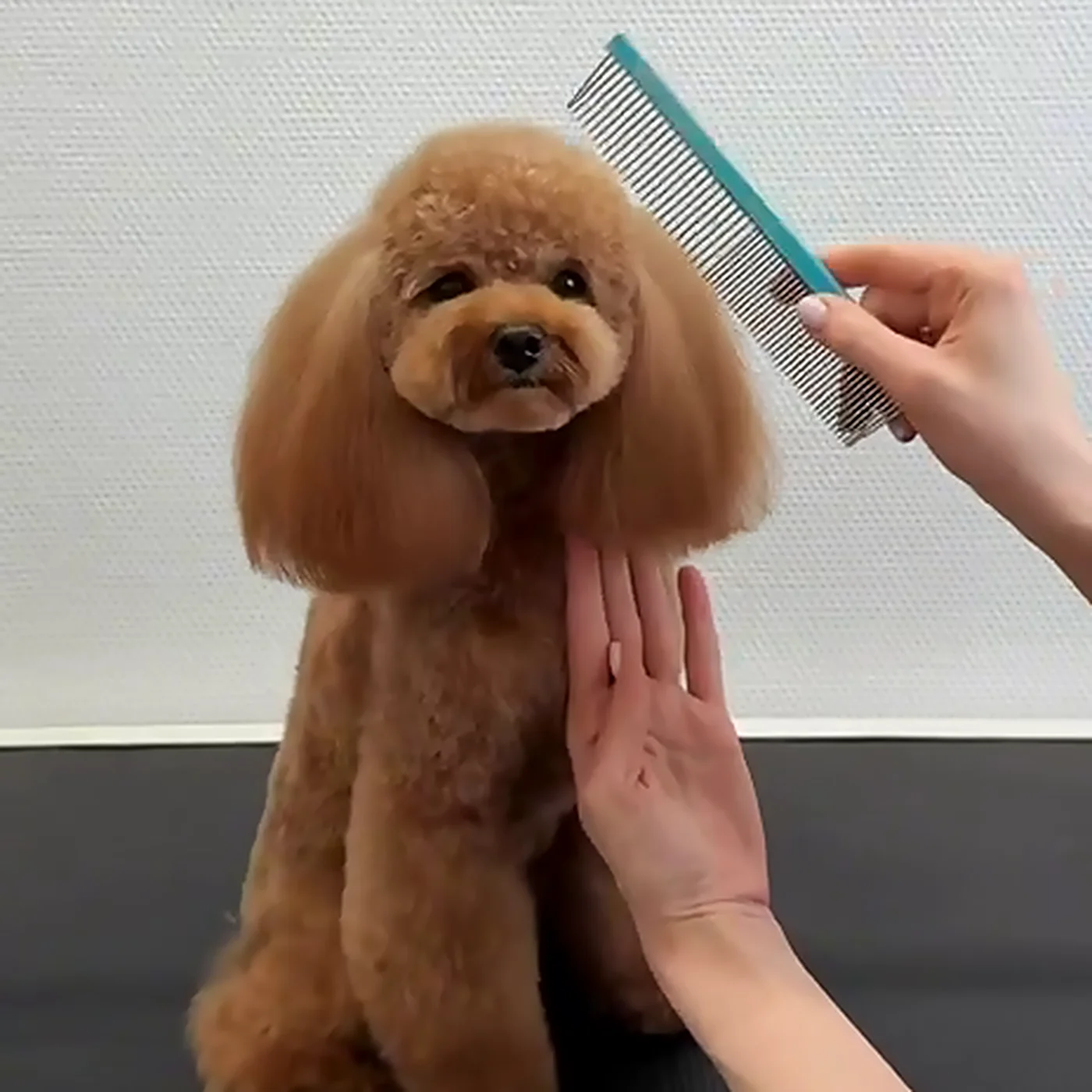
You can prevent matting by brushing the coat layer by layer right down to the skin several times a week and checking every spot with a metal comb. Only bathe your dog after they have been thoroughly brushed, and blow-dry them completely afterwards. Pay special attention to friction points under the harness and collar, and brush more frequently during coat changes. Here at GroomRoom in Berlin, breeds with continuously growing coats also visit the salon every 6 to 8 weeks.
- Brushing at home
- several times a week, layer by layer right down to the skin
- Checking
- the metal comb must glide down to the skin without resistance
- Bathing
- only after thorough brushing, then dry completely
- Risk areas
- behind the ears, armpits, chest under the harness, trousers
- Salon schedule
- continuously growing coats every 6 to 8 weeks, Pomeranian and Spitz every 6 to 10 weeks
The best way to prevent matting is with a solid routine: brush the coat layer by layer right down to the skin several times a week. Then check every spot with a metal comb, which must glide down to the skin without resistance. Only bathe your dog after thorough brushing and blow-dry them completely afterwards. Pay special attention to friction points under the harness and collar, and brush more frequently during coat changes. Here at GroomRoom in Berlin Charlottenburg, we see every day just how well this routine works.
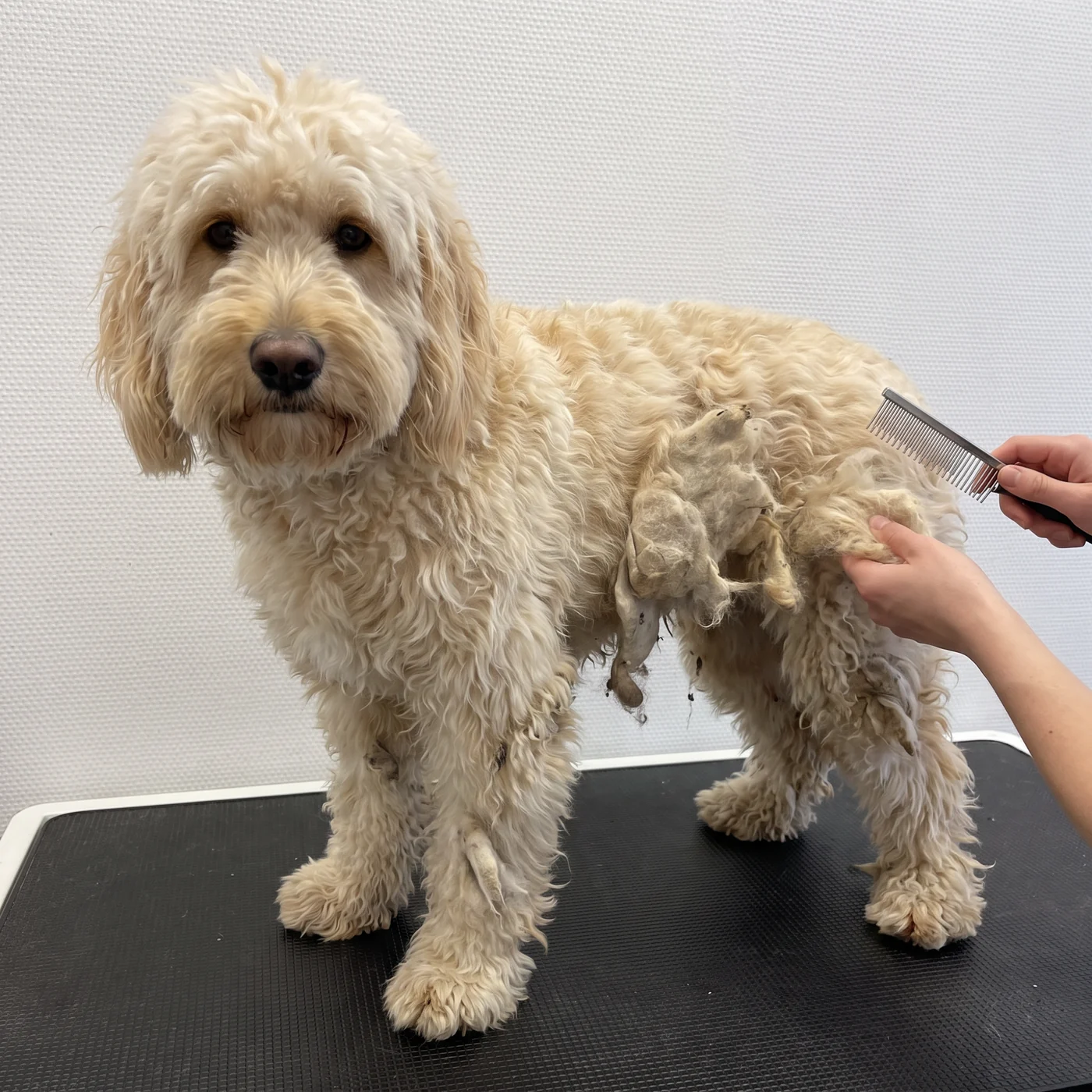
Is your dog already matted? Then our article Matted dog, what to do with a quick test and the next steps will help you out. Here, we're focusing on stopping it from getting that far in the first place. Prevention pays off, because a solid mat stops air from reaching the skin. The skin underneath gets damp, itchy, and can become inflamed. Plus, the mat pulls on the hair with every movement, causing your dog pain.
Which dogs are particularly prone to matted fur?
Matted fur in dogs mostly happens where loose hairs get trapped in the coat. That's why some coat types mat much faster than others. The table shows you how high the risk is for your dog and how often you should brush them.
| Coat type | Typical breeds | Matting risk | Brushing at home |
|---|---|---|---|
| Growing, curly coat | Poodle, Doodle, Bichon, Maltese | very high | a few minutes daily |
| Long, silky coat | Yorkshire Terrier, Shih Tzu, Havanese | high | daily or every other day |
| Double coat | Pomeranian, Spitz, Golden Retriever | high during shedding season | several times a week |
| Wire coat | Terrier, Schnauzer, Wirehaired Dachshund | medium | once a week |
| Short coat | Labrador, Beagle, Pug | low | once a week |
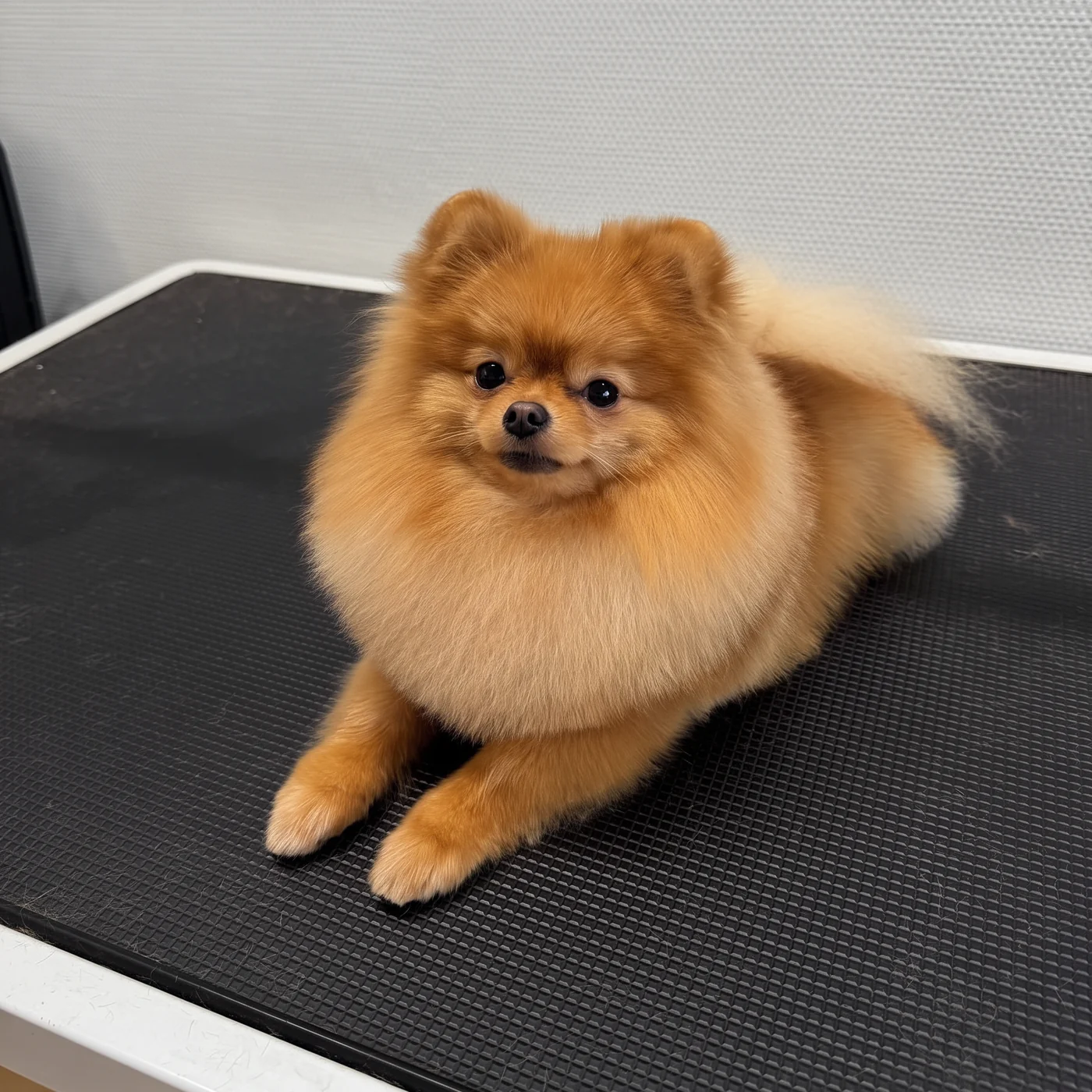
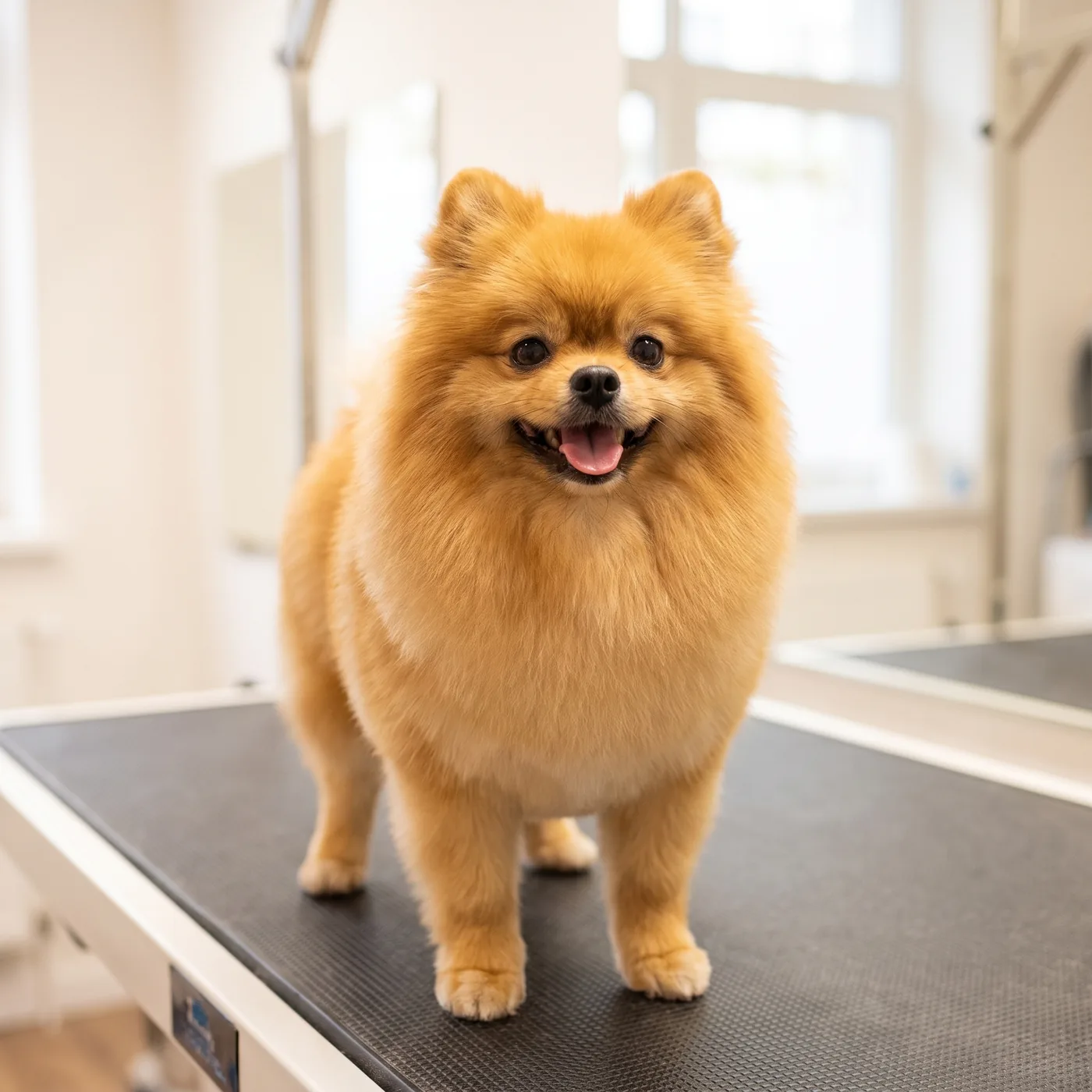
Growing coats don't have a natural shedding cycle, so loose hairs don't fall out and instead get tangled in the fur. With a double coat, the undercoat lies beneath the topcoat, forming a dense, soft layer of hair that sheds during shedding season. Doodles often have a mix of both, making them one of the dogs with the highest risk. You can read more about the dense coat of the Pomeranian in our article Pomeranian grooming in Berlin.
Brushing down to the skin: how to line-brush
The most important technique to prevent matting is line-brushing. This involves brushing the coat in thin layers so the brush reaches the skin every time. Many owners only brush the surface, leaving the undercoat to mat unnoticed underneath. Here is how to do it step by step:
- Start at the bottom of a back leg and slowly work your way up towards the back.
- Push the coat upwards with the flat of your hand to create a horizontal line of visible skin.
- Using a slicker brush, brush the coat below this line downwards and away from the skin.
- Release a thin strip of hair and brush it in the same way.
- Run a metal comb through the brushed area to check if it glides down to the skin without resistance.
- Repeat this on the legs, flanks, chest, neck, ears and tail, line by line.
A slicker brush has fine, curved metal pins and removes loose hair from the coat. Use light pressure and short strokes so the pins don't irritate the skin. If the comb catches, brush that exact spot again in smaller layers.
The right tools against matting
Two tools are enough for most dogs: a good slicker brush and a dual-sided metal comb. The brush loosens the hair, while the comb shows you if the job is truly done. Soft brushes and pin brushes only smooth the topcoat and don't reach the undercoat. For Pomeranians and Spitz breeds, a comb with longer teeth that reaches deep into the double coat is also ideal.
An oil-free grooming spray makes the coat smoother during brushing and prevents hair breakage. Mist it on lightly and never brush a completely dry, dusty coat. Replace your slicker brush when the pins become bent, as it will start pulling on the hair.
After every walk, do a quick comb behind the ears and under the armpits. Taking these two minutes prevents most of the knots we see in our dog grooming salon.
Brush first, then bathe, then dry completely
Water is the most common cause of sudden matting. A wet undercoat swells up, and loose hairs tighten into stubborn knots as they dry. That is why you should brush your dog thoroughly before every bath, making sure the comb glides down to the skin all over. The same goes before a swim in the lake or a long walk in the rain.
After bathing, squeeze the coat with a towel instead of rubbing it dry. Rubbing twists the hair and creates exactly the knots you want to avoid. Afterwards, blow-dry the coat completely while brushing in the direction of the airflow. A half-dry coat left to air-dry mats particularly quickly in curly breeds. At our salon, we bathe dogs in the Hydra tub and blow-dry every dog completely before we start cutting.
Friction points: harness, collar and favourite spot
Matting almost always happens in areas where the coat constantly rubs. The harness rubs against the chest and armpits with every step. The collar twists the hair around the neck, and your dog lies for hours on its 'trousers' – the long hair on the back of the hind legs. They scratch behind their ears, and the hair on their belly gets damp during walks.
Take off the harness and collar at home so the coat underneath can rest. Make sure the harness fits well and doesn't slip with every movement. If your dog wears a coat or jumper in winter, brush their armpits and chest particularly thoroughly afterwards. You can read more about getting your dog through the cold season in our article Dog grooming in winter.
Coat changes and seasons: when the risk increases
In spring and autumn, many dogs with an undercoat lose large amounts of hair. These loose hairs get caught in the topcoat and mat within a few days. Brush daily during these weeks and expect significantly more hair in the brush. A dog grooming salon appointment right in the middle of the coat change thoroughly removes the loose undercoat and gives you a break.
The first coat change from puppy to adult dog is also a critical phase. In Poodles and Doodles, the soft puppy hair gets caught in the new, curlier hair. You can find out more in our article Puppy coat care. In summer, swimming in lakes and sand increase the risk; in winter, it's snow, road salt and clothing.
Home remedies for matted coats: what really helps?
The most reliable home remedy for a matted dog coat is the metal comb in your hand. No shampoo or food can replace regular brushing right down to the skin. However, a few simple aids can make the job easier:
- A little cornflour on a small knot helps the comb glide through the hair more easily.
- An oil-free conditioning spray makes dry coats smooth and protects the hair from breaking.
- A quiet, dedicated spot for grooming ensures your dog stays still so you can work thoroughly.
We advise against using oils because they weigh the coat down and attract dirt. Nettle shampoo is often mentioned as a home remedy, but we don't know of any proven benefits against matting. A balanced diet supports a healthy coat; discuss any food supplements with your vet beforehand.
Your grooming routine at home and in the salon
The best prevention combines short sessions at home with regular appointments at the dog grooming salon. Breeds with continuously growing coats like Poodles, Doodles, Bichons, Malteses, Yorkshire Terriers and Shih Tzus come to us every 6 to 8 weeks. You should brush Pomeranians and Spitzes several times a week and bring them in every 6 to 10 weeks. Short-haired dogs need the salon every 8 to 12 weeks. We explain the right intervals for your dog in our article How often to visit the dog groomer.
In our Full Groom from 79 €, we bathe, blow-dry and brush your dog, and give them a breed-appropriate haircut. A shorter clip around the armpits, belly and trousers significantly lowers the risk of matting in these typical friction areas. For dogs that don't need a haircut, the Mini Groom from 59 € is often enough. If de-matting is needed, we charge from 15 € per 15 minutes started, and we'll tell you the final price beforehand. You can find all starting prices on our prices page.
If you're unsure which brush is right for your dog, pop into Giesebrechtstraße 2 between 10 and 18, Tuesday to Saturday. We'll show you how to do line-brushing for free, right on your dog's coat. You can book your next grooming appointment around the clock: Book appointment online.
Frequently Asked Questions
How do I prevent my dog's coat from matting?
Brush the coat in thin layers down to the skin several times a week and check every area with a metal comb. Only bathe your dog after a thorough brushing and blow-dry them completely afterwards. Complement your home care with regular appointments at our dog grooming salon in Berlin.
What home remedies help with a matted dog coat?
The most effective home remedy is a metal comb, which you can use to regularly check right down to the skin. A grooming spray or a little cornstarch helps the comb glide more easily through specific spots. Oils make the coat heavy and attract dirt, so we advise against them.
Which dog breeds mat the fastest?
Breeds with continuously growing, curly coats like Poodles, Doodles, Bichons and Maltese mat the fastest. Dogs with a thick double coat like Pomeranians and Spitzes also mat easily, especially when shedding. Short-haired dogs, on the other hand, hardly mat at all.
How often do I need to brush my dog to prevent matting?
For breeds with continuously growing coats, it's best to brush them for a few minutes every day. Pomeranians and Spitzes need brushing several times a week, and daily when shedding. For short-haired dogs, once a week is usually enough.
Why does my dog mat despite brushing?
Usually, the brush only reaches the topcoat, while the undercoat underneath continues to knot. That's why you should check every area down to the skin with a metal comb after brushing. Matting often occurs in friction areas that get missed during brushing, like the armpits.
What should I do if my dog is already matted?
You can carefully tease out light knots with a comb and grooming spray. If the matting is flat against the skin, your dog needs to visit the dog groomer. Here at GroomRoom Berlin, de-matting costs from 15 € per 15 minutes started, and we'll tell you the final price beforehand. We describe all the steps in our article on what to do if your dog is matted.
This guide is backed by the experience from our salon. Calculate price or book an appointment.