
Dog grooming in winter: keeping paws, coat and skin protected
Winter dog grooming: protect paws from road salt, prevent snowballs, spot frostbite, and care for the coat. Tips from our dog grooming salon in Berlin.

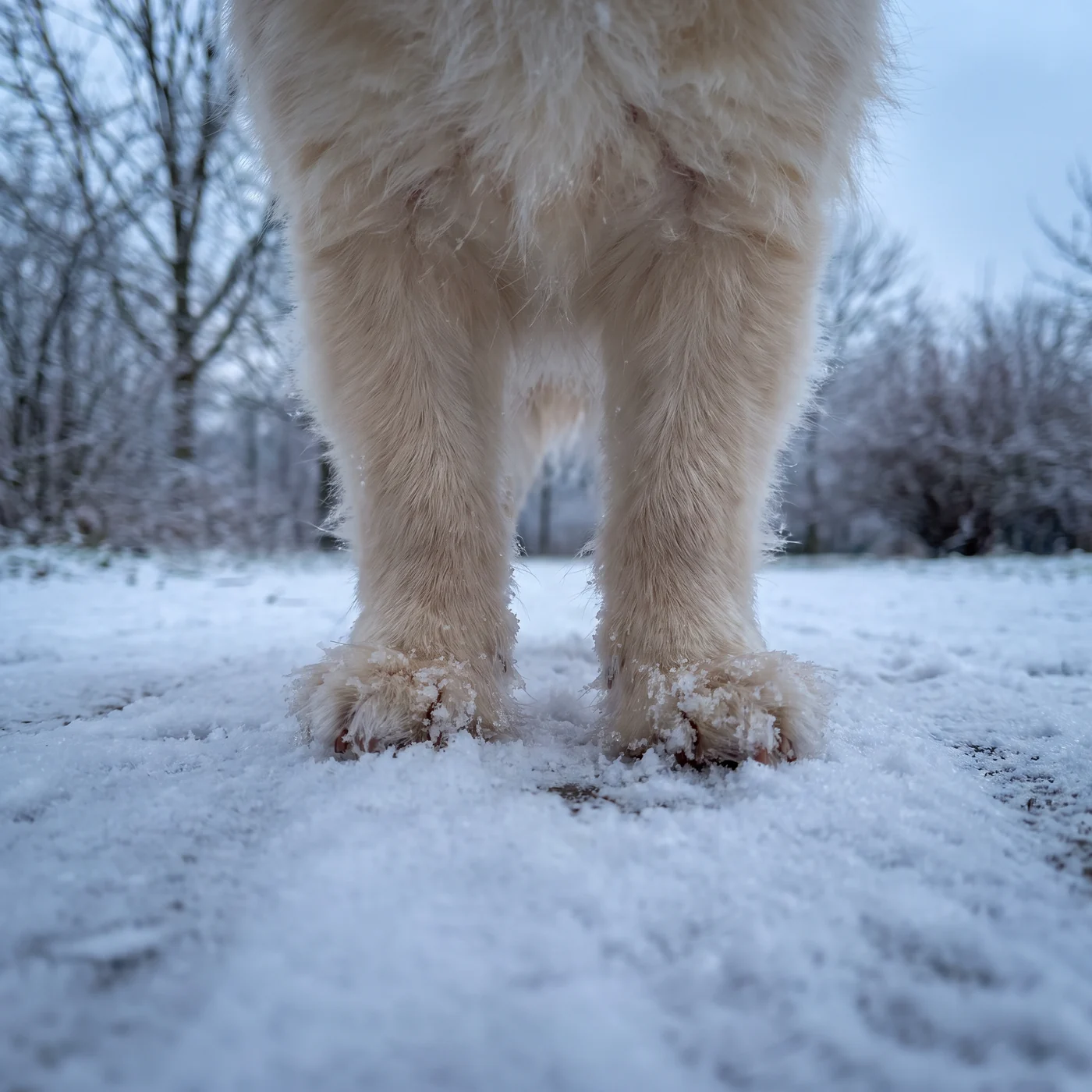
In winter, your dog mainly needs paw protection: rinse off road salt with lukewarm water after every walk and dry well between the toes. Short hair between the pads prevents painful snowballs. You shouldn't clip dogs with an undercoat short in winter, as the undercoat keeps them warm. Shivering, whining, pale or hard patches of skin are warning signs of hypothermia and frostbite.
- After the walk
- Rinse paws with lukewarm water and dry between the toes
- Snowballs
- Trim hair flush between the pads, paw trim from 18 €
- Coat in winter
- Don't clip the undercoat short, trim paws, belly and sanitary area
- Bathing
- only when necessary, blow-dry completely afterwards
- Cold warning signs
- Shivering, whining, weakness, pale or hard skin
When it comes to winter dog grooming, paws come first. Rinse off road salt and grit with lukewarm water after every walk and dry thoroughly between the toes. Short hair between the pads prevents painful snowballs from forming. Dogs with an undercoat keep their coat length in winter because the undercoat keeps them warm. Only bathe your dog when necessary and never let them out into the cold with a wet coat. At our dog grooming salon GroomRoom in Berlin Charlottenburg, we specifically prepare paws and coats for the cold season.
Road salt and grit: How to protect the paws
Road salt dries out the pads and stings in small cracks. Grit, meaning sharp-edged gravel, can get lodged between the toes and cause tiny cuts. If your dog licks the salt off their paws afterwards, it also irritates their stomach. That's why a quick grooming routine before and after every walk is well worth it.
Before your walk, apply a thin layer of paw balm to the pads. The balm creates a light film that stops salt and snow from sticking as easily. While out, avoid heavily gritted pavements and stick to untreated areas in the park. Back home, rinse the paws with lukewarm water and dry between each toe with a towel. Check the pads for cracks, redness and small stones while you're at it.
Dog boots reliably protect very sensitive paws from salt and ice. Just make sure to get your dog used to them gradually at home first. Most dogs walk very awkwardly in boots for the first few minutes.
Preventing snowballs between the pads
Long hair between the pads collects small clumps of ice in the snow. These snowballs grow with every step, pushing the toes apart and causing pain when walking. Many dogs will stop, lift a paw or chew at the clumps. Poodles, Doodles, Spitz breeds and all dogs with long hair on their legs are particularly affected.
The most effective help is a neatly trimmed paw. We trim the hair between the pads flush and round off the paw without hurting the skin. We also like to trim the hair on the belly and the inside of the legs a little in winter, as snow tends to stick there too. Paw trimming starts at 18 € with us, and you can find all our options under individual services. If clumps get stuck while you're out, thaw them with lukewarm water at home and don't pull at them.
Frostbite and hypothermia: Warning signs you need to know
Frostbite happens when the body pulls blood away from the ears, paws and tail to keep the core warm. Ice crystals can then form in the cold areas, damaging the tissue. Frostbite isn't always obvious right away. Look out for the following signs:
- The skin on the ears, paws or tail looks pale or grey.
- The affected area feels hard and cold.
- Your dog reacts with obvious pain when the area warms up.
- Severely frostbitten skin turns dark and flakes off after a few days.
Hypothermia affects the whole body and happens when a dog stays in the cold for too long or gets wet. In mild cases, they will shiver, and their ears and paws will feel cold. As hypothermia progresses, the dog will seem dull, weak and lethargic. Later, the muscles become stiff, heart rate and breathing slow down, and they barely react.
Severe hypothermia is life-threatening. Bring your dog into the warmth immediately, wrap them in blankets and go to the vet. Do not rub frostbitten areas, and only warm them slowly with lukewarm water.
Is your dog cold?
A good rule of thumb is: if it's too cold for you without a jacket, your dog is probably freezing too. Watch them closely outside, as dogs usually show they are cold through their behaviour. If they whine, shiver, tuck their tail or stop playing, it's time to go inside. Some dogs will also suddenly make a beeline for the front door.
Short-haired dogs without an undercoat, very small dogs, puppies, and older or poorly dogs feel the cold quickest. A well-fitting coat that goes from the neck to the base of the tail and covers the belly is a good idea for them. But a coat won't protect their ears or paws. So, in winter, it's better to plan several shorter walks rather than one long one.
How long should the coat be in winter?
You shouldn't clip dogs with an undercoat short in winter. The undercoat is the dense, soft layer of hair beneath the topcoat that traps warm air against the body. This applies to Pomeranians, Spitzes, Huskies, Golden Retrievers, and many crossbreeds. Brush their coat regularly so the undercoat stays loose and can do its job insulating.
For breeds with continuously growing coats like Poodles, Doodles, Bichons, and Maltese, the hair can stay a bit longer in winter. But longer hair mats more easily, especially under coats and harnesses, and after wet walks. A good compromise is a slightly longer cut on the body, keeping the paws, belly, and sanitary areas short. You can find out how to avoid knots during this time in our article Preventing matting.
Bathing, drying and skin care in the colder months
In winter, only bathe your dog if they are really dirty or smelly. Frequent bathing strips the natural oils from the skin, which is already prone to drying out from indoor heating. For salt and mud on the legs and belly, lukewarm water without shampoo is usually enough. If a bath is necessary, give them a thorough brush first and use a mild, pH-neutral shampoo.
After a bath, the coat needs to be completely dry, right down to the skin. A damp undercoat will quickly make your dog cold outside and can cause matting as it dries. So, blow-dry on a medium heat while brushing through the coat. In our dog grooming salon, we bathe using pH-neutral natural products from LT and Ecopets, and we blow-dry every dog until they are completely dry.
Dry skin from indoor heating
Dry indoor heating draws moisture from your dog's skin. You can spot this if they have dandruff, a dull coat, or are scratching a lot. Regular brushing distributes the natural oils through the coat and stimulates blood flow. Make sure not to put your dog's bed right next to the radiator.
Treat cracked pads in the evening with a little paw balm. If your dog is scratching a lot or you notice red, weeping patches, get a vet to check their skin. You should also discuss any skin and coat supplements with your vet first.
15 ways to protect your dog in winter
This list summarises the most important points for the colder months.
- Keep an eye out on every walk to see if your dog is shivering, whining, or wants to turn back.
- When it's freezing, it's better to pop outside for several short walks and make the most of the warmer hours around midday.
- Put a coat on short-haired, small, or older dogs that also covers their belly.
- Apply paw balm to the pads before your walk.
- Rinse the paws with lukewarm water after your walk and dry between the toes.
- Have the hair between the pads trimmed short to stop snowballs from forming.
- Dry wet fur thoroughly straight away after rain or snow.
- Only bathe when necessary and blow-dry the coat completely afterwards.
- Brush regularly to keep the undercoat loose and prevent knots from forming under coats and harnesses.
- Set up their bed on a warm blanket or an elevated bed, away from draughts and cold tiles.
- Secure fan heaters and fireplaces so your dog doesn't burn themselves.
- Store antifreeze safely out of reach, as it tastes sweet and is highly toxic to dogs.
- Don't let your dog eat snow, as it can cause stomach inflammation.
- Keep your dog on a lead near frozen lakes and canals, as the ice can break.
- Make sure your dog is clearly visible in the dark with a light-up collar or reflective harness.
Also keep an eye on their food: many dogs are less active in winter and need less energy. Throw a ball for playtime instead, as sticks can splinter and cause mouth injuries.
Winter care at a glance
| Problem | What helps | How often |
|---|---|---|
| Road salt on paws | Rinse paws with lukewarm water after a walk and dry them | after every walk |
| Cracked pads | Massage in a thin layer of paw balm | once or twice a day |
| Ice balls between the toes | Have the hair between the pads trimmed, from 18 € | every four to six weeks |
| Dry skin from indoor heating | Bathe less often, use mild shampoo, dry thoroughly | as needed |
| Wet coat after snow | Dry completely with a towel and a lukewarm hairdryer | after every wet walk |
Winter grooming at GroomRoom Berlin
Before the first snow, it's worth booking an appointment for paws, nails and coat. Our 4-in-1 combo package covering nails, paws, eyes and sanitary area starts at 45 €. For dogs that don't need a haircut, the Mini Groom starting at 59 € is perfect, including washing, drying, combing and paw care. The Full Groom with a breed-standard cut starts at 79 €. You can find all starting prices on our prices page, and we explain the right grooming schedule in our article How often should you visit the dog groomer.
We're here for you Tuesday to Saturday from 10 to 18 at Giesebrechtstraße 2, near Adenauerplatz underground station. If you're unsure how short your dog's coat can be in winter, we'll happily advise you for free at our dog grooming salon. You can book your appointment 24/7: Book appointment online.
Frequently Asked Questions
How do I protect my dog's paws from road salt?
Rub paw balm into the pads before your walk and avoid heavily gritted paths wherever possible. Rinse the paws with lukewarm water after every walk and dry thoroughly between the toes. For very sensitive paws, dog boots can help, provided you get your dog used to them slowly beforehand.
Should I cut my dog's coat short in winter?
You shouldn't clip dogs with an undercoat, like a Spitz, Pomeranian or Golden Retriever, short in winter, as the undercoat keeps them warm. However, it makes sense to trim the paws, belly and sanitary area, because snow and road salt collect there. For Poodles and Doodles, the coat can stay a bit longer as long as you brush it regularly.
How often should I bathe my dog in winter?
Only bathe your dog in winter if it's really necessary, because central heating dries out the skin and coat anyway. When you do, use a mild, pH-neutral shampoo and brush thoroughly beforehand. Blow-dry the coat completely afterwards before your dog goes back outside.
How do I recognise frostbite in dogs?
Frostbite on the ears, paws and tail often only appears with a delay. The skin looks pale or grey, feels hard and cold, and hurts when warmed up. Warm the areas slowly without rubbing and take your dog to the vet.
At what temperature does a dog need a coat?
There is no strict limit, because coat, size, age and health play a major role. Short-haired dogs without an undercoat, as well as very small, old and sick dogs, get cold much faster. If your dog is shivering or wants to turn back, a coat covering them from the neck to the base of the tail is a good idea.
How much does winter paw care cost at GroomRoom Berlin?
Paw trimming starts at 18 € and nail clipping from 15 €. The 4-in-1 combo package covering nails, paws, eyes and sanitary area starts at 45 €. We'll give you a binding final price before your appointment.
This guide is backed by the experience from our salon. Calculate price or book an appointment.