Puppy Grooming: When to Brush, Bathe and Cut?
Puppy coat care: when to brush, which brush to use, nails, paws, teeth, shedding and the first appointment at the dog groomer in Berlin.
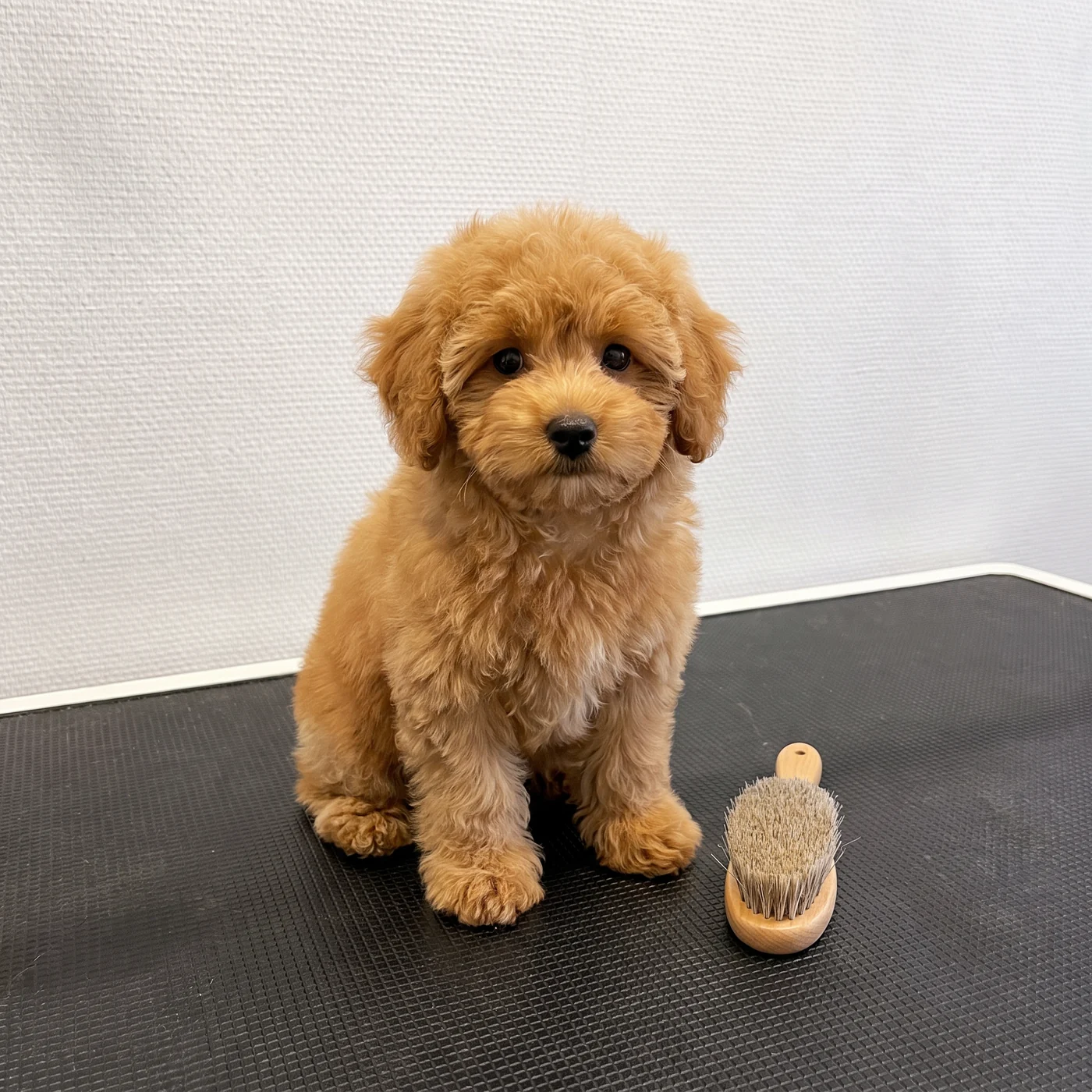
Start gentle brushing as soon as your puppy comes home, initially just for one to two minutes a day. Bathing is rarely needed in the first few months, but you should check their nails and paws every week. Once they've had their second vaccination, your puppy can visit our dog grooming salon, GroomRoom in Berlin, for their first introductory session. Breeds with growing coats usually need their first proper haircut at four to six months old.
- Brushing
- from the day they come home, initially one to two minutes a day
- First salon visit
- introductory session after the second vaccination
- First haircut
- for growing coats, usually at four to six months
- Coat transition
- puppy coat is replaced during the first year, depending on the breed
- Junior Grooming
- fixed price: 60 € under 5 kg, 75 € for 5 to 10 kg
Puppy grooming starts the day they come home, long before their coat actually needs it. Brush your puppy for one to two minutes a day with a soft brush at first, making sure to touch their paws, ears and mouth. Bathing is rarely needed in the first few months, but you should check their nails and paws every week. After their second vaccination, your puppy is welcome to visit our dog groomer at GroomRoom in Berlin Charlottenburg for their first introductory session. This helps them get used to the grooming table, brush and hairdryer before their first proper haircut.
When should you start brushing your puppy?
You can start brushing your puppy as soon as they come home with you. This is usually between eight and twelve weeks of age. At this stage, it's less about the coat and more about building trust. Your puppy needs to learn that being touched all over their body is a pleasant experience.
Start with one to two minutes a day and slowly increase the time. First, stroke their back, chest and legs with your hand, then introduce the brush. Briefly lift their paws and massage the pads and toes. Choose a quiet moment for this, ideally after playing when your puppy is tired. Small, pea-sized treats help them associate grooming with something positive.
Always stop while your puppy is still relaxed. A short, positive session is much better than a long one that ends in fidgeting.
Which puppy brush is right for which coat?
The right puppy brush depends on the coat your dog will have as an adult. For the first few weeks, a soft brush is enough because puppy skin is thin and sensitive. Once the coat gets thicker, you'll also need a metal comb to check if the brush has really reached down to the skin.
| Coat type | Typical breeds | Right tools | Brushing at home |
|---|---|---|---|
| Short coat | Labrador, Beagle, Pug | Rubber grooming glove, soft brush | once a week |
| Continuously growing coat | Poodle, Doodle, Bichon, Maltese | soft slicker brush, metal comb | briefly every day |
| Double coat | Pomeranian, Spitz, Golden Retriever | Slicker brush, metal comb with two tooth widths | several times a week |
| Wire coat | Terrier, Schnauzer, Wirehaired Dachshund | soft brush, fine comb | once a week |
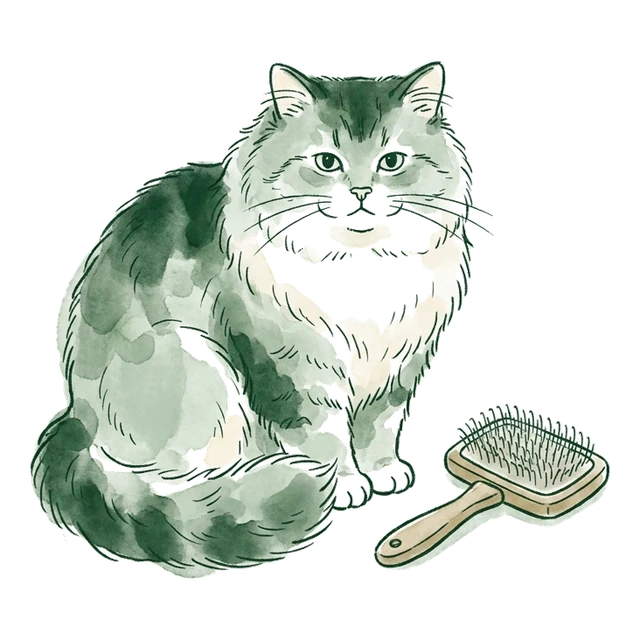
A slicker brush has fine, slightly bent metal pins and removes loose hair. Only use gentle pressure on your puppy so the pins don't scratch their skin. A double coat means a dense, soft undercoat grows beneath the topcoat to keep the dog warm. Your basic kit should also include puppy shampoo, a towel, nail clippers and a dog toothbrush.
How to get your puppy used to grooming
Dogs are creatures of habit, and a set routine gives your puppy security. That's why you should set up a dedicated grooming spot, like a table with a non-slip mat. Practise the following steps over several days, just a few minutes each day.
- Play with your puppy for ten minutes so they burn off some energy before grooming.
- Place them on the non-slip mat and reward them as soon as they stand or sit quietly.
- Touch their ears, paws, tail and mouth one after the other, and praise every calm reaction.
- Brush a small section of their back and check the area afterwards with a comb.
- Briefly turn the hairdryer on a low setting from a distance.
- End the session with a game or a chew before they get restless.
With this routine, puppy grooming becomes a little ritual your dog recognises. You can read more about how to prepare for their first salon visit in our article First visit to the dog groomer.
Bathing, teeth, eyes and ears for puppies
How often can I bathe my puppy?
A puppy rarely needs a bath because their coat hardly collects any sebum or dirt. Until they are about three months old, a warm, damp cloth is enough for dirty spots. After that, you can bathe them in lukewarm water with a mild puppy shampoo as needed. Keep shampoo away from their eyes, ears and nose, and rinse the coat thoroughly.
Brush your puppy thoroughly before every bath, as wet knots tighten into mats when drying. Dry them completely afterwards with a towel and a hairdryer on a low heat. A half-wet puppy gets cold quickly and shouldn't go outside during this time.
Practise teeth brushing from the start
Baby teeth fall out roughly between the fourth and seventh month. Until then, gently massage your puppy's teeth and gums with your finger. Once they have their adult teeth, brush them regularly with a dog toothbrush and dog toothpaste.
Never use human toothpaste. It can contain the sweetener xylitol, which is toxic to dogs even in small amounts.
Briefly check the eyes and ears during every grooming session. Wipe away tear stains with a soft, damp cloth, working outwards from the corner of the eye. Only clean the outside of the ear flap and never push anything into the ear canal.
Nail clipping and paw trimming for puppies
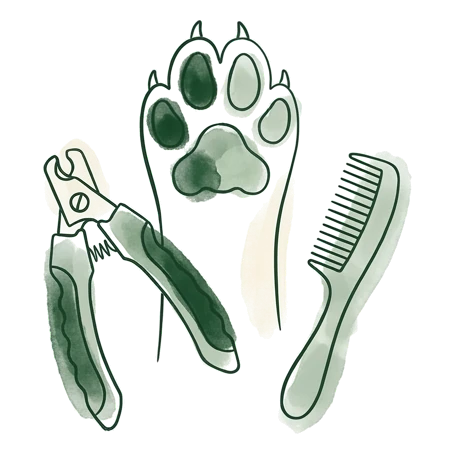
You can start nail clipping from the very first day your puppy comes home. Puppy nails are sharp and grow quickly, even if your dog is very active. If you hear a clicking sound on the floor when they walk, their nails are too long. Just snip off the very tip using small nail clippers.
Inside every nail is the quick, which is a bundle of blood vessels and nerves. On light nails, you can see it as a pink area, but on dark nails, it's invisible. That's why you need to be extra careful with dark nails and just trim a tiny bit at a time. Keep some styptic powder handy just in case.
Paw trimming is also part of puppy grooming as soon as longer hair starts growing between the pads. This hair collects dirt, little stones and small clumps of ice in winter. We trim it flush with the pads using round-tipped scissors and give the paw a neat, round shape. If doing this at home feels a bit too tricky, we offer nail clipping from 15 € and paw trimming from 18 €. You can find all our individual treatments on the Individual treatments page.
Puppy haircuts: When is the right time for their first trim?
Breeds with continuously growing coats usually need their first proper haircut between four and six months of age. This type of coat doesn't shed naturally and needs regular trimming. This applies to Poodles, Doodles, Bichons, Maltese, Yorkshire Terriers and Shih Tzus. Before then, we only trim specific areas that get in the way, like the hair around the eyes, paws and bottom.
The first scissor appointment at our dog grooming salon is a puppy trim. We just take off the tips, clear the hair around the eyes, and tidy up the paws and sanitary area. This is also when your puppy gets used to the sound and vibration of the clippers. To find out which style will suit your dog later on, check out our article Poodles, Doodles and the Teddy-Cut.
We recommend holding back on cutting your puppy's coat at home. Puppies make sudden movements, and sharp scissors can easily injure their eyes or skin. Using clippers is almost never necessary for puppies. You also shouldn't have a Pomeranian or Spitz clipped short later on, as their double coat often grows back unevenly.
The coat transition from puppy to adult dog
During the puppy coat transition, the adult coat gradually replaces the soft puppy fur. The exact timing really depends on the breed, but it usually happens sometime during their first year. For Pomeranians and Spitz breeds, the coat often looks a bit scruffy and patchy during this phase. This is completely normal, and their coat will look full again once the transition is complete.
For Poodles and Doodles, the coat transition is the time with the highest risk of matting. The loose, soft puppy hairs get caught in the new, curlier adult coat and form tight knots close to the skin. You'll need to brush daily during this phase and check every single spot right down to the skin using a metal comb. We explain how to keep your dog mat-free for good in our article Preventing matting.
The first salon appointment after the second vaccination
Here at GroomRoom, your puppy can come in for their first introductory session after their second vaccination. Your vet will know the exact timing, as it depends on their vaccination schedule. The sooner they visit after that, the easier it will be for your puppy to get used to the dog grooming salon. Please bring their vaccination record with you and let us know it's their first visit when you book.
The first appointment is kept short and includes more breaks than any future visit. Your puppy gets to sniff around the salon first before standing on the table just with their groomer. We then introduce a few gentle steps: a light brush-through, nail clipping and the quick sound of the hairdryer. You're welcome to watch from outside through our shop window.
For small dogs up to 10 kg, our Junior Grooming at a fixed price is a great starting point. It costs 60 € for dogs under 5 kg and 75 € for 5 to 10 kg, available on Wednesdays and Saturdays from 16:00 to 19:00. Larger puppies can book a Mini Grooming from 59 € or individual services from 15 €. You can find all starting prices on our prices page.
We're here for you Tuesday to Saturday from 10:00 to 18:00 at our dog grooming salon on Giesebrechtstraße 2. If you're unsure what kind of grooming your puppy needs, just pop in, the consultation is free. You can book your first appointment around the clock: Book appointment online.
Frequently Asked Questions
What's the best way to groom my puppy?
Groom your puppy for a few minutes every day following a set routine. Brush them briefly, touch their paws, ears and mouth, and reward every calm reaction. Check their nails, eyes and teeth once a week at the same time.
When can you start brushing a puppy?
You can brush your puppy as soon as they move in with you. Start with a soft brush and just one to two minutes a day. In these early weeks, it's more important that your puppy finds the touch pleasant than having a perfectly smooth coat.
When can a puppy go to the dog groomer?
Here at GroomRoom, a puppy can come for their first introductory appointment after their second vaccination. Your vet will know the exact timing, as it depends on the vaccination schedule. The first visit is all about getting used to the table, brush and hairdryer, not a full haircut just yet.
When can you start cutting a puppy's hair?
An experienced hand can trim individual hairs around the eyes, paws and bottom quite early on. Poodles, Doodles and other breeds with continuously growing coats usually need their first proper haircut at four to six months. Before that, your puppy should have had plenty of time to get used to scissors and clippers.
When can you start clipping a puppy's nails?
You can start nail clipping from the very first day your puppy lives with you. Only take off the very tip and stay well away from the quick. If you hear their nails clicking on the floor when they walk, they are too long.
When do puppies shed their puppy coat?
The soft puppy coat is replaced by the adult coat during their first year, though the exact timing depends heavily on the breed. During this phase, the coat gets matted particularly quickly because loose puppy hairs get caught in the new hair. Brush more frequently then, and always right down to the skin.
How much does a puppy's first grooming cost in Berlin?
For small dogs up to 10 kg, we offer Junior Grooming at a fixed price: 60 € for dogs under 5 kg and 75 € for 5 to 10 kg. Individual services like nail clipping start at 15 €. We will give you a binding final price before the appointment, once we have seen your puppy.
This guide is backed by the experience from our salon. Calculate price or book an appointment.