

Dog Deshedding: How to Remove Undercoat Properly
Dog shedding heavily? How to spot undercoat, properly remove loose fur during shedding season and know when to visit a dog grooming salon.

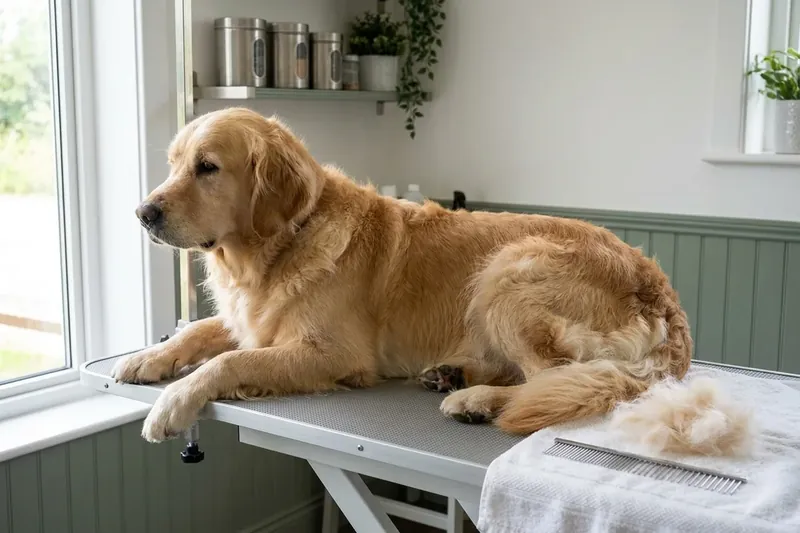
Dogs shed their coats mainly in spring and autumn. During this time, they lose a massive amount of dense undercoat. We at GroomRoom Berlin at Giesebrechtstraße 2, 10629 Berlin are here to help you with this process. Our dog grooming salon is open Tuesday to Saturday. Using special tools, we gently and thoroughly remove the loose fur. A professional full groom starts at 79 €.
- Season
- Spring and autumn
- Duration of shedding
- Varies depending on coat type and lifestyle
- Salon treatment
- Deshedding (removing the undercoat)
- Full Groom price
- From 79 €
- Routine at home
- Brush several times a week
Many dogs lose a lot of undercoat in spring and autumn. Gentle brushing removes loose hair and helps spot knots early. This removal of loose undercoat is also called deshedding. At GroomRoom Berlin, your dog groomer in Giesebrechtstraße 2, 10629 Berlin, we tailor the grooming to the coat type and skin condition. A Full Groom starts at 79 €. Bald patches, broken skin or severe itching should be checked by a vet and not just dismissed as normal shedding.
When do dogs shed their coats?
Many dogs shed more heavily in spring and autumn. Daylight hours and other environmental factors affect the hair cycle; coat type and lifestyle also change how it progresses. Dogs that spend a lot of time indoors might lose hair all year round. So, not every dog has two clearly defined shedding phases. Keep an eye on what's normal for your dog. If you notice a sudden change, bald patches or accompanying skin problems, a vet should investigate the cause.
Services, duration and prices at GroomRoom
Starting prices including VAT, based on online booking. We will give you the final, binding price before the appointment after assessing the coat.
| Service | Duration | Price from |
|---|---|---|
| Full groom with haircut, XS up to 2 kg | 60 min | from 79 € |
| Full groom with haircut, S 2.5 to 10 kg (also Spitz, Pomeranian, Yorkshire) | 120 min | 89 to 135 € |
| Full groom with haircut, M 10 to 18 kg | 120 to 150 min | 149 to 169 € |
| Full groom with haircut, L 18 to 25 kg, Standard Poodle, Samoyed | 180 min | from 209 € |
| Mini groom without haircut, up to 30 kg | 60 to 180 mins | 59 to 169 € |
| Cat, brushing, clipping or full package | 60 to 90 mins | 99 to 149 € |
| Hand stripping (hand-stripping) | 120 min | 70 € per hour |
Which breeds have a particularly thick undercoat?
Not every dog goes through an extreme shedding phase. The amount of hair lost depends heavily on the breed. Dogs with a double coat shed particularly heavily. This coat consists of a topcoat and an undercoat. We also call this coat structure a stock coat. Well-known breeds with a lot of undercoat include the Golden Retriever and the Labrador. We explain the special features of these breeds in the article Golden Retriever dog groomer Berlin. Nordic breeds like the Husky or Samoyed also have extremely thick wool. The Pomeranian falls into this category too. It owes its plush look exactly to this dense undercoat. Herding dogs like the Australian Shepherd or Border Collie also shed heavily in spring and autumn. Regular grooming is especially important for these breeds. Dogs without an undercoat, on the other hand, hardly shed at all. These include breeds like the Poodle or Maltese. Their coat continues to grow steadily and does not fall out seasonally.
How do you know when shedding season starts?
More loose hair on the sofa, on the brush or when petting your dog can point to shedding. With a thick undercoat, sometimes whole tufts come loose. That alone isn't a sign of illness. However, repeated scratching, bald patches, redness or broken skin should be assessed by a vet. These changes can't be reliably explained by shedding alone. Don't brush affected skin areas intensely and don't pull on stubborn hair.
What exactly does the undercoat do?
The undercoat and topcoat work together to provide protection. The thick undercoat helps with heat insulation; the longer topcoat protects against external elements, among other things. Still, a thick coat doesn't make a dog immune to the heat. Shade, water and adjusted activity levels remain important. Loose hair can knot with the rest of the coat. Matting makes it harder to check the skin, and moisture can stay trapped in the coat for longer. Regular, gentle dog grooming helps spot these changes early.
Is clipping a thick coat a good idea?
A short clip isn't automatically the right summer grooming choice for a double coat. It removes the protective topcoat and can reduce protection against the sun. The coat might also grow back unevenly. However, this doesn't mean every clip permanently damages the coat. Trimming might be necessary for severe matting or medical reasons. The skin condition, coat type and the animal's wellbeing are what matter most. If loose undercoat is the actual issue, gentle brushing is often the better approach. For any skin changes, a veterinary exam will determine the next steps.
How often should you brush your dog right now?
During shedding season, you should brush your dog several times a week. For breeds with a heavy undercoat, we recommend daily combing. This removes the loose hairs straight from the coat, preventing thick knots and painful matting. If you neglect brushing, the undercoat gets tangled with the topcoat. You can prevent matting by taking just ten minutes a day. Your dog will quickly get used to this routine. Include small treats and praise your furry friend. Stroke them in between and speak to them calmly. This turns grooming into lovely bonding time. It's best to start this training when they are a puppy. For a deep clean, it's best to visit our dog grooming salon Berlin.
The right tools for grooming at home
You need the right equipment for grooming at home. A simple brush often isn't enough for a thick coat. It just glides over the topcoat, leaving the loose undercoat untouched against the skin. We recommend using a combination of high-quality tools.
- Slicker brush: This brush has lots of fine metal pins. It's highly effective at removing surface knots and loose hair.
- Undercoat rake: This tool has rounded metal teeth. The rake gently pulls loose undercoat out from deep within the fur.
- Metal comb: A comb with both coarse and fine teeth helps you double-check your work. You use it to check the coat right down to the skin for any remaining knots.
- Detangling spray: A good conditioning spray makes brushing dry coats much easier. It keeps the hair smooth and prevents breakage.
Never press the tools firmly against your dog's skin. The sharp teeth can cause small scratches and lead to painful inflammation.
What happens if you neglect grooming during shedding season?
Loose hair can tangle with the remaining coat to form knots. Tight matting can pull on the skin, trap moisture and make it harder to check for skin changes. Pain or inflammation are possible, but not every mat leads to an infection. Skin doesn't need to breathe like lungs do. Sweating under the coat doesn't accurately explain these problems in dogs either. Don't cut out matting close to the skin yourself with scissors: the skin might be pulled into the mat. For painful areas, bad odours, redness or weeping skin, a vet should help first.
Nutrition to support a healthy coat
A balanced diet is part of your dog's general care. Shedding alone is no reason to give oils, zinc, biotin or other supplements without advice. Whether a supplement makes sense depends on their current food and health condition, among other things. For noticeable hair loss or skin problems, the cause should be checked by a vet. A dog grooming consultation doesn't replace this exam.
What happens during deshedding at the salon?
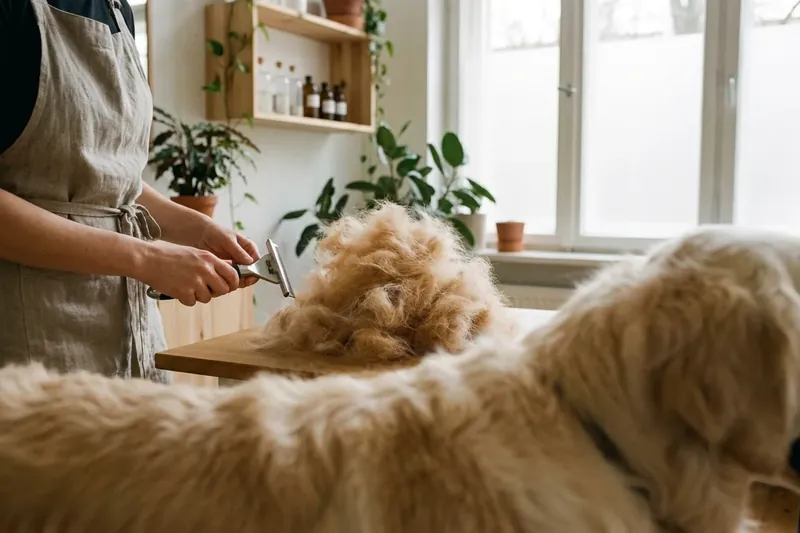
During deshedding, we remove already loose undercoat using grooming techniques suited to the coat. Washing, careful drying and gentle brushing can all work together here. The hair isn't pulled out by the root. Dogs tolerate noise, airflow and touch differently; we adapt our approach accordingly. Tight matting isn't forcefully combed out. We'll discuss the scope and duration after an assessment. This treatment can be part of our Full Groom.
Dog grooming prices Berlin: What does professional grooming cost?
The cost of an appointment depends on the effort required and the size of your dog. A standard Full Groom starts from 79 €. Deshedding extremely thick undercoat often requires extra time. For dematting, we charge 15 € per started 15 minutes. For breeds with a very demanding double coat, we apply a Pomeranian surcharge of 20 € for a Mini Groom (already included in the Spitz/Pom Full Groom package). You can find all the details on our prices page. We'll take a close look at your dog's coat before the appointment. Then we'll give you a binding final price. You're also welcome to contact us for advice beforehand. You can easily book your appointment online via our website. We look forward to your visit.
Case studies from the salon
Real appointments from GroomRoom, prices as charged (as of September 2026). The final price depends on the coat condition and will be confirmed before we start.

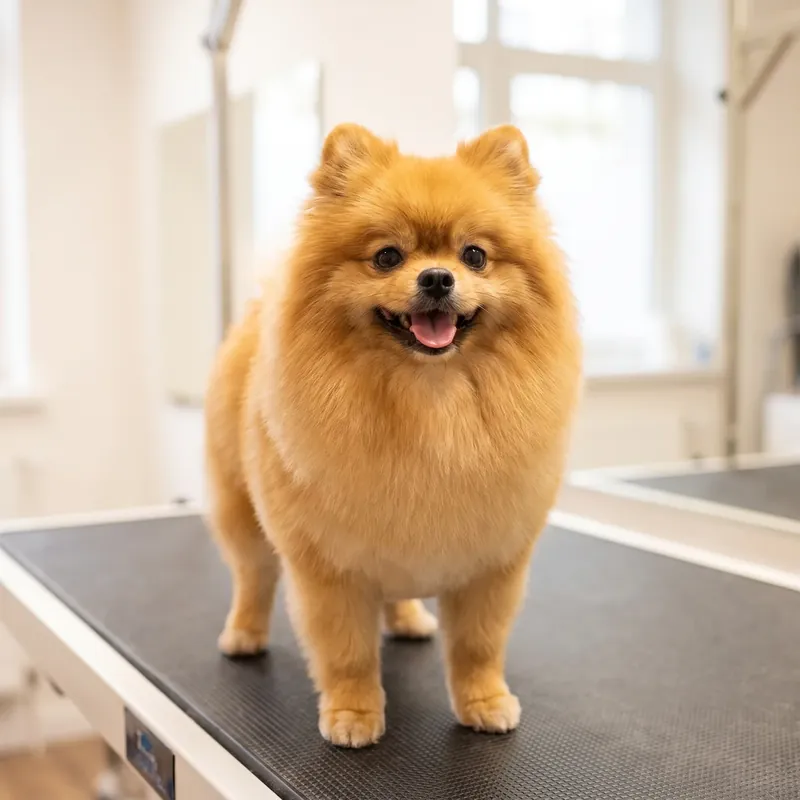
Pomeranian
- Before
- Pomeranian after six months without a salon visit, undercoat matted in places.
- Treatment
- Full Grooming with dematting and Pomeranian surcharge: brushing out the undercoat, bath, blow-dry, styling without clippers.
- Duration
- 2.5 hours
- Price
- 165 to 180 €
- Groomer
- Team GroomRoom
 Example image
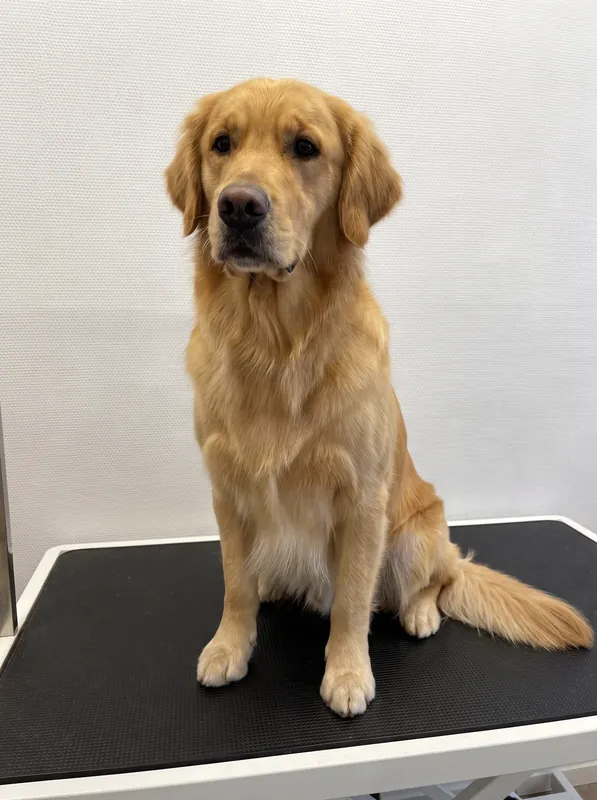
Golden Retriever
- Before
- Very anxious Golden Retriever, first salon visit, lots of loose undercoat.
- Treatment
- Full groom with breaks and a second person: bath, long blow-dry with deshedding of the undercoat, paws, nails, ears; no clipping of the double coat.
- Duration
- around 3 hours
- Price
- 209 to 240 €
- Groomer
- Team GroomRoom
We visited GroomRoom for the first time and are absolutely thrilled. We've finally found our dog groomer in Kristina. We will definitely be coming back. Unfortunately, I can only give five stars, even though you deserve at least ten.
Frequently Asked Questions
When does shedding season happen for dogs?
Many dogs lose a lot of hair in spring and autumn. Daylight, coat type and lifestyle influence the process. For some dogs, hair loss is spread more evenly throughout the year. There is no set duration for every dog. Sudden unusual hair loss or bald patches should be checked by a vet.
How often should I brush my dog during shedding season?
You should brush your dog thoroughly several times a week during this period. For breeds with a very thick undercoat, we recommend daily combing. This prevents painful matting and thick knots. Take about ten minutes a day to do this.
Can I just shave my dog in the summer?
A short clip isn't a blanket solution for summer heat for dogs with a double coat. The coat also protects against the sun; after clipping, it can grow back unevenly. However, clipping can still make sense for severe matting or medical reasons. Have the coat condition and potential skin problems professionally assessed first.
How much does deshedding cost at the salon?
Professional deshedding is part of our full groom. This starts at 79 €. For very thick coats or severe matting, we charge an additional fee based on the time required. We will assess the coat in person and give you the exact price.
Which tools help with a lot of undercoat?
A slicker brush and a special undercoat rake are the best tools for home grooming. They gently remove loose hair from deep within the coat. A metal comb helps you check for knots afterwards. Be careful not to scratch your dog's skin.
Sources and professional context
- AAHA: Why Does My Pet Shed? · accessed on 2026-09-17
- Merck Veterinary Manual: Structure of the Skin in Dogs · accessed 2026-09-17
- American Kennel Club: How Should You Groom a Double-Coated Dog? · accessed 2026-09-17