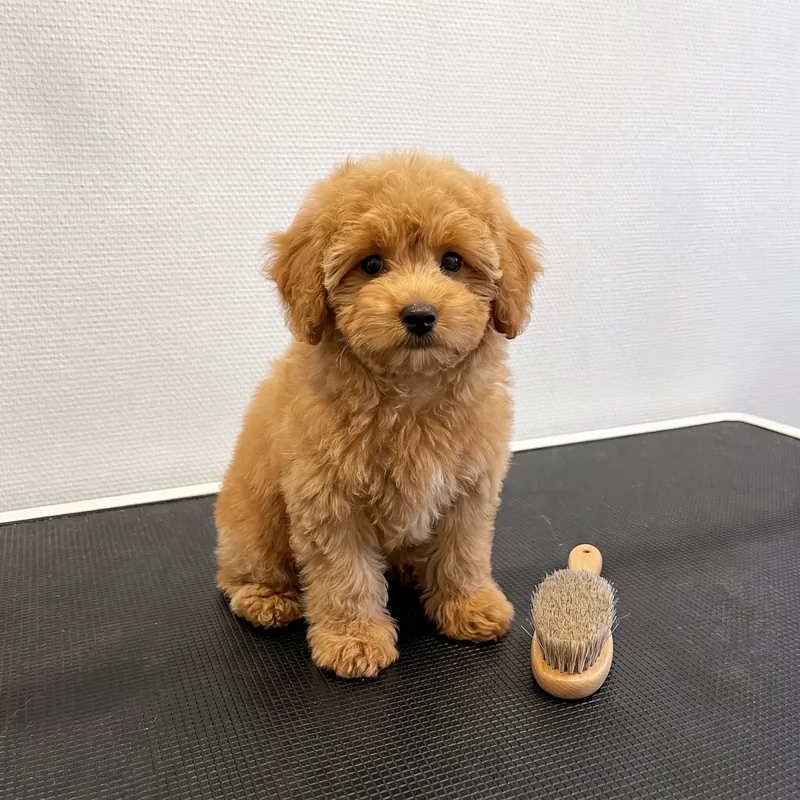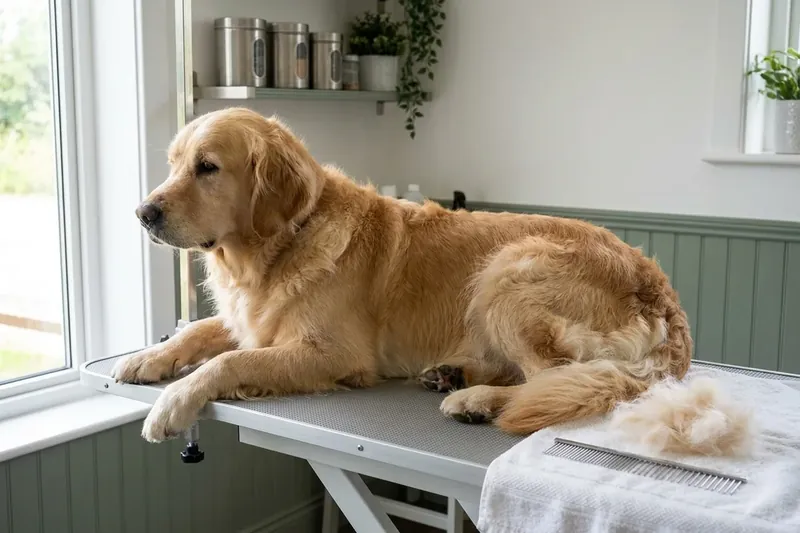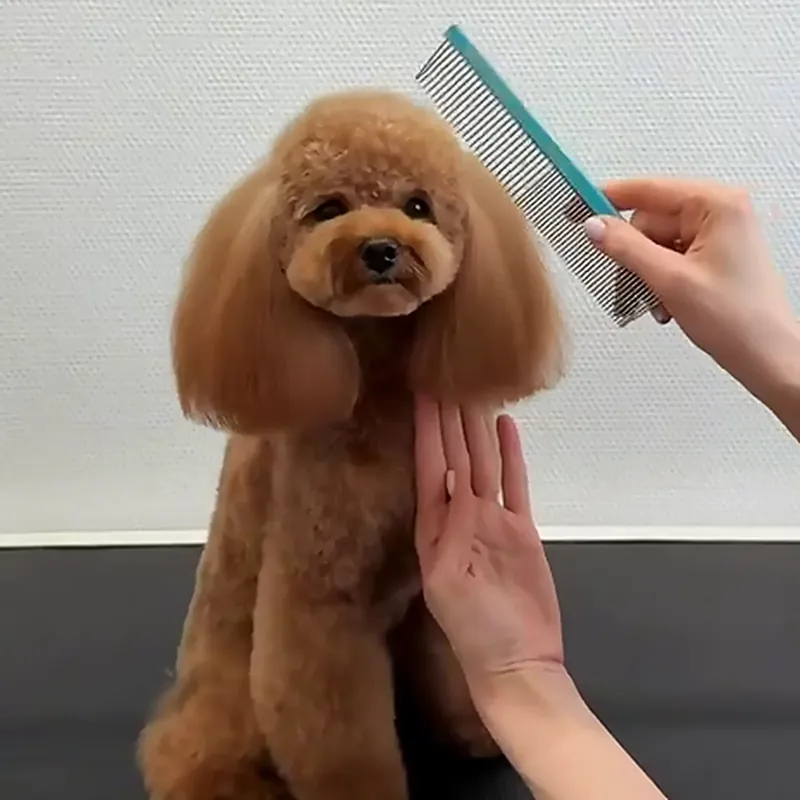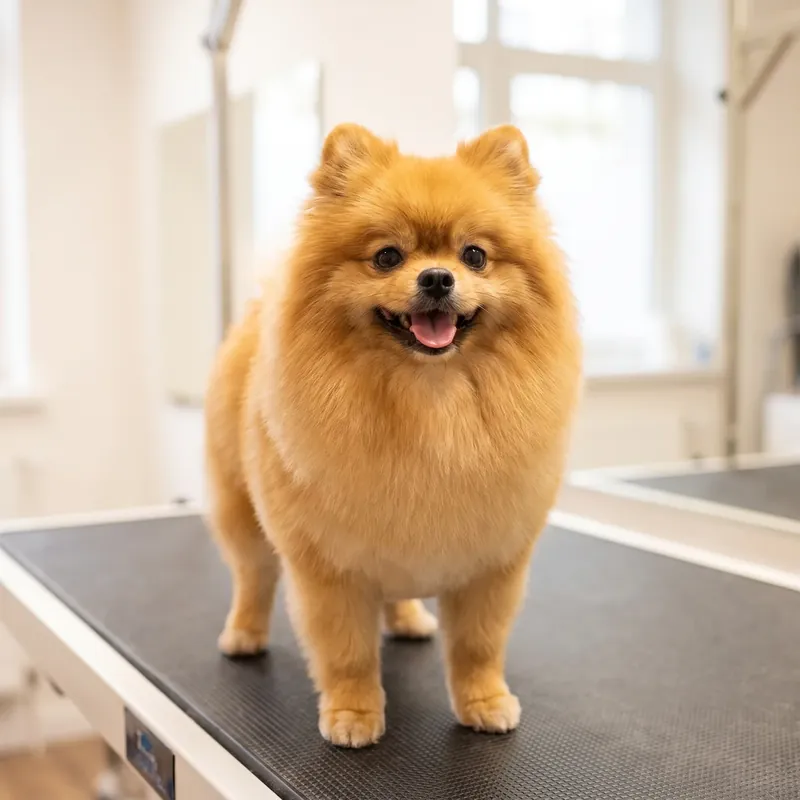


Puppy coat change: from puppy coat to adult coat
When puppies lose their soft fur, how to adjust their grooming, and which warning signs to look out for. With tips from GroomRoom in Berlin.

During the puppy coat transition, the soft first coat is replaced by a usually thicker and coarser adult coat. The transition often starts between four and six months, though it can be earlier or later depending on the breed. Your brush and grooming routine need to match the current coat type; bald patches or severe itching should be checked by a vet.
- Start
- Often between four and six months, earlier or later depending on the breed.
- Coat texture
- Adult coats are usually thicker and coarser than puppy coats.
- Tools
- Choose your brush and comb based on the current coat length and texture.
- Warning signs
- Have bald patches, red skin or severe scratching checked by a vet.
- First salon appointment
- Puppy introduction groom after the second vaccination, without a haircut.
During the puppy coat transition, a thicker adult coat replaces the soft first fur; the timing depends on the breed. The transition often begins between four and six months, sometimes much earlier or later. At GroomRoom in Berlin Charlottenburg, we discuss the right care based on the coat's condition. Appointments are available Tuesday to Saturday by arrangement, and the puppy introduction groom costs 59 € for dogs up to three kilograms.
When does a dog lose its puppy coat?
Dogs often lose their puppy coat between four and six months, but the breed significantly affects the timing. The American Kennel Club mentions possible starts at twelve weeks or as late as a year. This range describes the beginning of the transition. It doesn't promise a fixed date when every adult coat is fully developed.
For Pomeranians, the full adult coat might only develop by the age of two, according to the same source. A later start doesn't automatically mean you need to change anything about their grooming. What really matters is how the coat and skin actually look.
Use age as a guide when you want to make sense of changes. You can't deduce a strict deadline like 'after six months everything must be finished' from this. If you're unsure, ask specifically about your dog's coat type. If there are any health issues, your vet is the right person to speak to, even if the timing fits the puppy coat transition.
Services, duration and prices at GroomRoom
Starting prices including VAT, based on online booking. We will give you the final, binding price before the appointment after assessing the coat.
| Service | Duration | Price from |
|---|---|---|
| Full groom with haircut, XS up to 2 kg | 60 min | from 79 € |
| Full groom with haircut, S 2.5 to 10 kg (also Spitz, Pomeranian, Yorkshire) | 120 min | 89 to 135 € |
| Full groom with haircut, M 10 to 18 kg | 120 to 150 min | 149 to 169 € |
| Full groom with haircut, L 18 to 25 kg, Standard Poodle, Samoyed | 180 min | from 209 € |
| Mini groom without haircut, up to 30 kg | 60 to 180 mins | 59 to 169 € |
| Cat, brushing, clipping or full package | 60 to 90 mins | 99 to 149 € |
| Hand stripping (hand-stripping) | 120 min | 70 € per hour |
How do you recognise the transition to an adult coat?
An adult coat is usually thicker and coarser than the soft puppy coat. Colour and markings can also change during the transition. In short-haired dogs, the change is sometimes barely noticeable. In others, the new coat looks temporarily scruffier. The visible change therefore differs just as much as the timing of the transition.
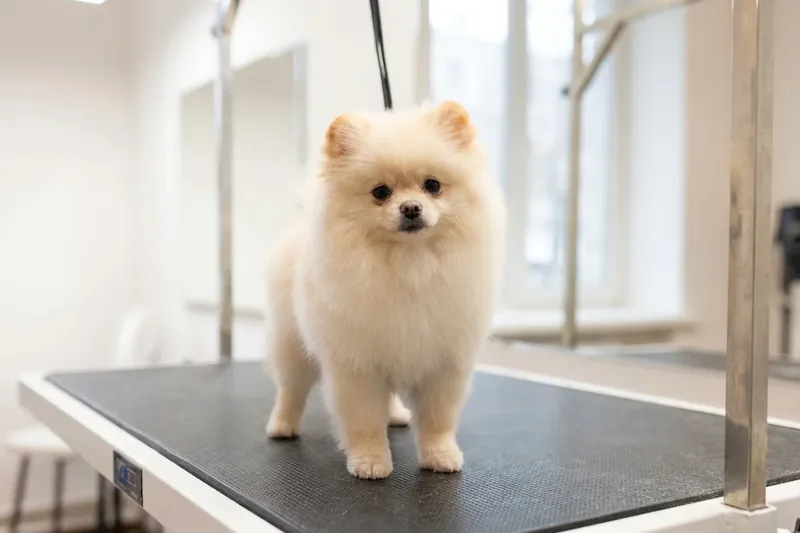
Dogs with a double coat develop different layers of hair: the undercoat is the shorter, softer layer beneath the outer topcoat. Other dogs develop a single coat. This can be curly, for example, or long and silky. The American Kennel Club's description shows why an adult coat doesn't look the same on every dog.
So don't judge the transition just by the hair on the sofa. Compare the coat texture and pay attention to the skin at the same time. Bald patches, redness or excessive scratching need veterinary attention. A changed overall appearance of the coat is different from a newly formed bald patch.
How does the transition differ from seasonal shedding?
The transition from puppy coat to adult coat is part of a young dog's development. Seasonal shedding, on the other hand, follows the seasons and can recur. Dogs that shed seasonally lose fur particularly in spring and autumn. Both terms therefore describe different processes, even if you might notice more loose hair in both cases.
The American Kennel Club's article on shedding describes the exchange of a winter coat for a lighter coat. Daylight and temperature influence this seasonal process. The developmental transition, however, describes the change from the first soft fur to the adult coat type.
The actual condition of the coat is what really matters for grooming. Heavier shedding can sometimes mean you need to brush more often; the right tool depends on the coat type. But losing a lot of hair alone doesn't explain skin changes. For more on the regular shedding of a thick undercoat, you'll find further tips in our article Dog shedding and undercoat. That guide focuses on seasonal grooming.
How do you adapt your brushing and combing to the new coat texture?
Your brush and comb need to match your young dog's current coat length and texture. Soft puppy fur often needs a softer brush than their future adult coat. As the coat gets longer or thicker, you'll need different tools. That's why it's best to get some advice on which tool is right for your dog's current coat condition.
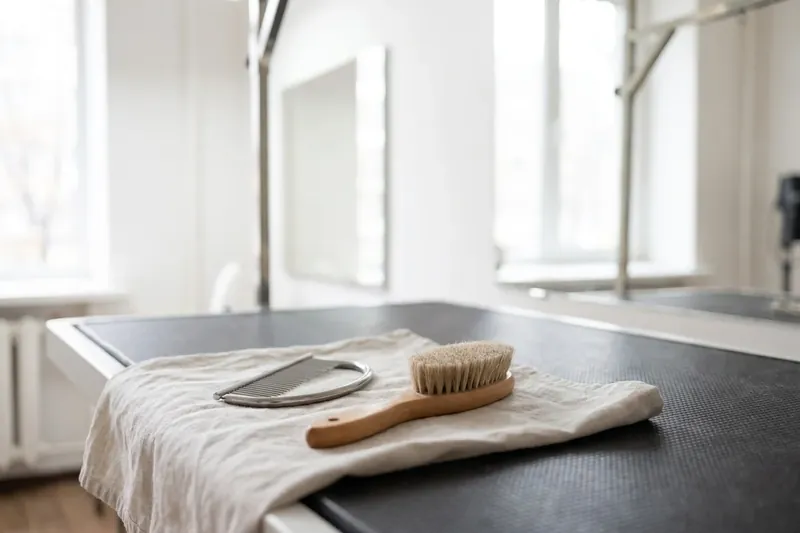
The animal charity PDSA recommends choosing grooming tools based on coat type and seeking professional advice if you're unsure. For longer coats with an undercoat, the American Kennel Club describes tools that also reach the lower layer of hair. Work gently with these and use light pressure. More force is no substitute for the right tool.
You can make your grooming decisions in this order:
- Check the coat length and texture before you carry on using your old brush.
- Have someone show you the right brush and a suitable comb for this coat condition.
- Brush carefully and stop grooming if your dog seems anxious or stressed.
- Get professional help for stubborn matting instead of trying to force it out at home.
In the salon, we don't pull on mats. If the coat is heavily matted, we'll discuss the best solution with you.
How often does a changing young dog's coat need grooming?
There is no one-size-fits-all brushing schedule for young dog coats that suits every breed. Coat length and texture determine the grooming needs. The PDSA suggests daily brushing for long-haired dogs and several sessions a week for medium-length coats. During periods of heavy shedding, extra grooming might be necessary. So, adapt your routine to your dog's actual coat.
These general recommendations aren't strict age limits for when the puppy coat change is complete. According to the PDSA, the curly coats of poodle crosses can be prone to knots despite shedding less. So, seeing fewer loose hairs doesn't automatically mean your dog needs less grooming. Discuss the right tools and how often to use them as soon as the coat texture changes.
Our article on puppy care and introduction covers the basic grooming routine. This section is about adapting it to their new coat. At your appointment, you can show us your current brush and describe any difficulties you've noticed. We choose products based on coat type and skin condition, and take breaks whenever needed.
Stop grooming if your dog seems anxious. The PDSA recommends taking things slowly with plenty of praise and breaks.
Which skin changes need a vet visit?
Bald patches, red or inflamed skin, and heavy scratching need to be seen by a vet. Dandruff and unusually large amounts of hair loss should also be checked. The puppy coat change doesn't automatically explain these symptoms. Pain, bleeding, or broken skin are also reasons for a veterinary check-up. A grooming appointment doesn't replace a medical examination of these changes.
The PDSA states that normal shedding shouldn't leave the coat bald or patchy. Sudden hair loss in a specific area can indicate a problem. Note down for the vet where you've noticed it and any other changes that come with it. For example, mention increased licking, nibbling, or scabs if you spot them.
Don't try to guess the cause based solely on your dog's age. The PDSA advises getting an examination before trying home remedies for hair loss. We don't diagnose conditions in the salon. If you notice skin irritation or discomfort while brushing, your dog needs a vet's assessment first before we can proceed.
Adapting salon grooming to the transition
At GroomRoom, grooming for young dogs is tailored to their coat type, skin condition, and how they handle the grooming situation. We don't start puppies off with a Full Groom right away. Getting to know each other and gradual acclimatisation come first. During the puppy introduction groom, the first appointment involves no cutting; water, the hairdryer, and the comb are introduced gently.
The puppy introduction groom and its included services is designed for puppies up to ten kilograms from their second vaccination. Beforehand, we'll check their age, breed, and vaccination status. The appointment takes 45 to 60 minutes and is booked via WhatsApp.
| Puppy introduction groom | Price | Duration |
|---|---|---|
| Up to three kilograms | 59 € | 45 to 60 minutes |
| Up to ten kilograms | 89 € | 45 to 60 minutes |
A developmental change alone isn't a reason to automatically choose a clip. At GroomRoom, for example, we don't clip Spitz or Golden Retrievers with an undercoat. You can read about our process with introductions and breaks beforehand. The price overview for grooming services helps with planning; we'll give you the final, binding price after a personal assessment before the appointment.
We took our little Mokka for her very first grooming appointment with Natalie today and are absolutely thrilled! 🥹🐾🤍 Natalie was incredibly sweet, patient and professional with Mokka right from the start, which immediately made us feel in very good hands.
Frequently Asked Questions
Is the puppy coat change complete at six months?
There's no general timeframe for this. The American Kennel Club states four to six months as a common starting point, but describes major differences between breeds. For a Pomeranian, the full adult coat can take up to two years to develop.
Can the colour change when shedding the puppy coat?
Yes, colour and markings can change during the transition. The adult coat is also usually thicker and coarser than the soft first coat.
Does my dog need a different brush now?
That depends on the changed coat structure. A soft puppy coat often needs a softer brush than an adult coat. Let us show you the right tools for the current coat type.
Are bald patches normal when shedding the puppy coat?
Any new bald patches should be checked by a vet. The same applies to red skin, unusual hair loss or excessive scratching. Don't assume the cause is just their age.
How much does the puppy introduction groom at GroomRoom cost?
It costs 59 € for up to three kilograms and 89 € for up to ten kilograms. The appointment takes 45 to 60 minutes and doesn't include a cut. We'll check age, breed and vaccination status beforehand; appointments are made via WhatsApp.
Sources and professional context
- Why Do Puppies Shed Their Coat? What To Know About Puppy Fur · accessed on
- Hair loss (alopecia) in dogs - PDSA · accessed on
- How often should you groom your pet? - PDSA · accessed on
- Dog Shedding: When Dogs Shed Most and How to Manage It · accessed on